TOP 20 LARGEST COUNTRIES BY POPULATION (LIVE)
Monday, December 7, 2015


Tuesday, November 24, 2015
Marine Biodiversity :Philippine Setting
LOREN LEGARDA: Philippine Marine Biodiversity Documentary
In a bid to raise awareness on the current condition of the country's marine life and underwater resources, Senator Loren Legarda, Chair of the Senate Committee on Environment and Natural Resources, launched a video documentary on Philippine marine biodiversity.
Monday, November 23, 2015

Thursday, November 19, 2015
Tuesday, October 12, 2010
ENVIRONMENTAL LAWS OF THE PHILIPPINES
ENVIRONMENTAL LAWS AND POLICIES
Bio 425/426/427 (Environmental Issues and Policies)
P.D. 984 – Pollution Control Law
P.D. 1151 – Philippine Environmental Policy
- defines the general policies on he pursuit of a better quality of life for the present and future generations and mandates the undertaking the environmental impact assessments for all projects, which may significantly affect the environment.
P.D. 1152 – Philippine Environmental Policy
- defines the policy objectives and the strategies for the various aspects of environmental management, such as air and water quality management, natural source development, land management, and waste management. It launches a comprehensive national program of environmental protection and management, with reference to policies and standards of noise, air quality, water quality, classification of water and waste management.
P.D. 1586 – defines the framework for the implementation of the environmental impact assessment as the mechanism to reconcile the impacts of development projects on society and the physical environment.
P.D. 389 (P.D. 705) – The Forestry Reform Code
- codifies, updates and raises forestry laws in the country. It emphasizes the sustainable utilization of forest resources.
P.D. 330 & P.D. 953 – laws on penalizing illegal cutting of trees
P.D. 953 & 1153 – laws on tree planting
P.D. 331- laws requiring all public forests be developed on a sustained yield basis.
P.D. 704 – preservation of optimum productivity of fishery resources through conservation and protection.
P.D. 1015 – banning the operation of commercial fishing within a distance of 7 kilometers from the shoreline.
P.D. 1058 – increasing the penalties for illegal forms of fishing.
P.D. 1219 – providing for the protection of coral ecosystems.
P.D. 1067 – Water Code of the Philippines
- adopts adequate measures to conserve and regulate the use of water in commercial, industrial and residential areas. It also provides other policy guidelines in water quality and management of water resources.
P.D. 463 – amended the Mining Act of 1936, requires all mining leaseholders to comply with Pollution Control Laws and regulations and provide for penalties for noncompliance.
P.D. 1198 – reinforces this provision for restoration of mined-out areas to this original condition to the extent possible.
P.D. 1251 – imposes fines on tailings and mine wastes and the fund generated is used to pay for the damages to land, agricultural crops, forests products, aquatic resources and infrastructures caused by pollution for mining operations.
P.D. 984 – The Pollution Control Law
P.D. 1181 (supplements the provision of P.D. 984) – providing for the abatement, control and prevention of vehicular pollution & establishing the maximum allowance emissions of specific air pollutants from all types of vehicle.
P.D. 600 ( amended by P.D. 979) – Water Pollution Control
- prohibits the discharge of oil, noxious liquid substances, and other harmful substances into the country’s inland and territorial waters.
P.D. 825 – prohibits the improper disposal of garbage
P.D. 856 – Sanitation Code
- places the responsibility in the local government units for he solid waste management in his area of production.
P.D. 1144 – Control of Pesticides
R.A. 8749 – Philippine Clean Air Act of 1999
- provides for a comprehensive air pollution control policy
R.A – 3720 – Food Additives
R.A. 6425 – Drugs
R.A 280 – Cosmetics
R.A. 7160 – Local Government Code of 1991
-provides that local government should share with the national government the responsibility in the management and maintenance of ecological balance within their territorial jurisdiction subject to national policies and other pertinent provisions of the code.
R.A. 6969 – Toxic Substances and Hazardous and Nuclear Wastes Control Act
- authorizes the DENR to establish a program to regulate, restrict or prohibit the importation, manufacture, processing, sale, destruction, use and disposal of chemical substances, and mixture that present unreasonable risk and/or injury to health or the environment.
R.A. 8550 – The Fisheries Code of the Philippines
- defines the policies of the state in the protection, conservation and effective management of fisheries stock as well as identifying allowable fishing methods in Philippine coastal waters.
R.A. 9003 – The Solid Waste Management Act of 2001- an act providing for an ecological solid waste management program, creating the necessary institutional mechanisms and incentives, declaring certain acts prohibited and providing penalties, appropriating funds therefor, and for other purposes.
R.A. 9275- also known as the Philippine Clean Water Act of 2004 – an act providing a comprehensive water quality management and for other purposes.
R.A. 9729 – also known as the Climate Change Act of 2009. - an act mainstreaming climate change into government policy formulations, establishing the framework strategy and program on climate change, creating for this purpose the climate change commission, and for other purposes.Tuesday, February 2, 2010
TOPICS ON ENVIRONMENTAL ISSUES FOR THE FINAL TERM
These are the different environmental issues to be discussed as part of the requirements for 2BSINFOSYS-B section. Create a personal blog and include the following topics as part of your report (for infosystem students). For those who are not 2bsis students submit your reports on short-sized bond paper, minimum of three (3) pages, single-spaced, with illustrations or photos, and at the end of the page cite all your references or sources. Please be guided accordingly.
Submission of papers would be by topic and should be done every Thursday of the week.
TOPICS:
1. Global Warming-vs- Climate Change (Causes and Effects)
2. Ozone Depletion (Causes and Effects)
3. Solid Waste Management (RA 9003), Biodegradable-vs-non biodegradable, and other hazardous wastes
4. Population Growth (Phil. Setting/Current data of Phil. population/Family Planning/Unemployment/Rapid Urbanization)
5. Pollution (Air, Water, and Terrestrial - Causes, effects)
6. Renewable-vs-non renewable resources (types and uses)
7. Mineral Depletion, Deforestation, Coral Bleaching, Mangrove Ecosystem
8. El Nino and La Nina Weather Disturbances, Typhoons (Phil Setting)
9. Biodiversity Loss (Endangered, Threatened and Extinct Species)
Submission of papers would be by topic and should be done every Thursday of the week.
TOPICS:
1. Global Warming-vs- Climate Change (Causes and Effects)
2. Ozone Depletion (Causes and Effects)
3. Solid Waste Management (RA 9003), Biodegradable-vs-non biodegradable, and other hazardous wastes
4. Population Growth (Phil. Setting/Current data of Phil. population/Family Planning/Unemployment/Rapid Urbanization)
5. Pollution (Air, Water, and Terrestrial - Causes, effects)
6. Renewable-vs-non renewable resources (types and uses)
7. Mineral Depletion, Deforestation, Coral Bleaching, Mangrove Ecosystem
8. El Nino and La Nina Weather Disturbances, Typhoons (Phil Setting)
9. Biodiversity Loss (Endangered, Threatened and Extinct Species)
Monday, December 14, 2009
Environmental Science Crossword Puzzle No. 1

This is your assignment for January 2010.
Make a print out and submit with answers on our 1st meeting on January.
Across
1. Animal that hunts and eats prey.[8]
3. Organism on or in which a parasite lives.[4]
6. Type of adaptation relating to an organism's shape and size.[10]
8. Relationship where animals of different species help each other.[9]
9. Number of organisms of a species in an area at a particular time.[10]
11. Place where an organism lives.[7]
12. Factor that affects population numbers.[7]
16. Type of adaptation relating to an animal's actions.[11]
17. Organism that feeds off another e.g. tick.[8]
18. Living and non-living surroundings.[11]
19. All the organisms in a given area at a given time.[9]
20. A natural unit of living and non-living parts that interact to produce a stable system.[9]
Down
1. Non-living or abiotic.[8]
2. Study of interrelationships of living organisms with their surroundings.[7]
4. "Living together" of organisms of different species for a long period of time.[9]
5. Animal that is eaten by a predator.[4]
7. Example of a physical factor in the environment is water and air ____.[11]
10. Relationship where two different organisms use the same resource such as food.[11]
13. Characteristic of an organism that enables it to function more effectively in its surroundings.[10]
14. Example of an important living or biotic factor.[4]
15. Example of an important physical factor is amount of drinking ____.[5]
Sunday, September 20, 2009
NON-RENEWABLE ENERGY/RESOURCES
Natural resource, such as coal, oil, or natural gas, that takes millions of years to form naturally and therefore cannot be replaced once it is consumed; it will eventually be used up. The main energy sources used by humans are non-renewable.In short, these are the things that can run out or can be used up. They usually come from the ground. There are fixed amounts of these resources. They are not living things and they are hard to find. They don't regrow and they are not replaced quickly.
Today, scientists find ways to limit the use of these resources of energy to make them more or less sustainable, lasting not just in the current generation, but also to the next.
What are the non-renewable resources?
a. Wood (Trees) -
Once served as the world's chief fuel. In many developing countries where there are lots of forested area, wood is still the main source of energy. It is also a source of livelihood like furniture making and sculpting (wood carvings). Also, the forests areas needed for farming are being indiscrimately burned using the kainging or slash and burn method.
Although easier said than done, the trend must be towards the creation of sustainable forest:
1. Proper education on the value of forest to discourage slash and burns.
2. Harvesting only what is needed.
3. Planting to replace those harvested.
4. Zero-waste management on wood being harvested. Wood chips and grains can be harnessed as biomass energy.
 Kaingin or slash and burn method
b. Coal
 About 26% of the world's energy still uses coal as their fuel source, whether for producing heat or electrical.
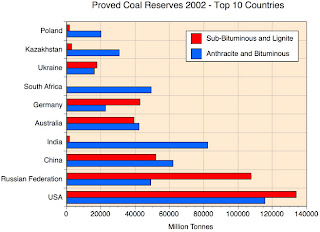 The Philippines has an abundance of coal, especially in Regions II (Cagayan Valley), VI (Panay, Negros Oriental), and XIII or CARAGA (Agusan and Surigao provinces).
The most notable coald-based power plants are Pagbilao 1 and 2 in Quezon province and ACMDC Coal Plant in Cebu.
Problems using Coal
a) accidents in coal mines
b) diseases that result from breathing coal dust
c) strip mining causes erosion of mining sites
d) when burned, coal releases nitrogen oxide and sulfur dioxide and other impurities that pollute the air, leading to the formation of acid rain.
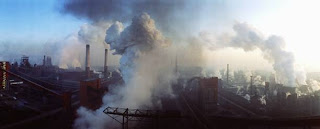 The main pollutant that cause acid rain, industries eject sulfur dioxide and nitrogen oxide into the atmosphere which becomes part of the clouds and form acid rain
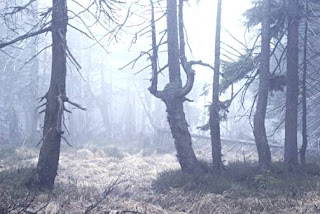 See how the trees become leafless and dead because of their being exposed to acid rain
c. Petroleum
One of the world's most important resources. Its by products are essential in cooking and heating, powering vehicles and airplanes, and even electricity generation.
Most petroleum is removed from deep within the earth as a liquid called crude oil. Workers pump crude oil out of the earth through wells drilled into oil-bearing formation called reservoirs. Because it is liquid, crude oil can be economically transported long distances by pipelines to refineries. Refineries process it into gasoline and other petroleum products.
Today, scientists find ways to limit the use of these resources of energy to make them more or less sustainable, lasting not just in the current generation, but also to the next.
What are the non-renewable resources?
a. Wood (Trees) -
Once served as the world's chief fuel. In many developing countries where there are lots of forested area, wood is still the main source of energy. It is also a source of livelihood like furniture making and sculpting (wood carvings). Also, the forests areas needed for farming are being indiscrimately burned using the kainging or slash and burn method.
Although easier said than done, the trend must be towards the creation of sustainable forest:
1. Proper education on the value of forest to discourage slash and burns.
2. Harvesting only what is needed.
3. Planting to replace those harvested.
4. Zero-waste management on wood being harvested. Wood chips and grains can be harnessed as biomass energy.
 Kaingin or slash and burn method
b. Coal
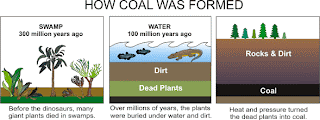
This is a result of a half a million to even several million years of compression and heat applied to decaying plants growing in bogs or swampy areas. Because of this length of time for nature to form coal, it is considered a non renewable source of energy.
 Coal
Coal
 Coal
Coal About 26% of the world's energy still uses coal as their fuel source, whether for producing heat or electrical.
 The Philippines has an abundance of coal, especially in Regions II (Cagayan Valley), VI (Panay, Negros Oriental), and XIII or CARAGA (Agusan and Surigao provinces).
The most notable coald-based power plants are Pagbilao 1 and 2 in Quezon province and ACMDC Coal Plant in Cebu.
Problems using Coal
a) accidents in coal mines
b) diseases that result from breathing coal dust
c) strip mining causes erosion of mining sites
d) when burned, coal releases nitrogen oxide and sulfur dioxide and other impurities that pollute the air, leading to the formation of acid rain.
 The main pollutant that cause acid rain, industries eject sulfur dioxide and nitrogen oxide into the atmosphere which becomes part of the clouds and form acid rain
 See how the trees become leafless and dead because of their being exposed to acid rain
One of the world's most important resources. Its by products are essential in cooking and heating, powering vehicles and airplanes, and even electricity generation.
Most petroleum is removed from deep within the earth as a liquid called crude oil. Workers pump crude oil out of the earth through wells drilled into oil-bearing formation called reservoirs. Because it is liquid, crude oil can be economically transported long distances by pipelines to refineries. Refineries process it into gasoline and other petroleum products.
Greatest Oil Reserves by Country, 2006
| Country | Proved reserves (billion barrels) | |
|---|---|---|
| 1. | Saudi Arabia | 264.3 |
| 2. | Canada | 178.8 |
| 3. | Iran | 132.5 |
| 4. | Iraq | 115.0 |
| 5. | Kuwait | 101.5 |
| 6. | United Arab Emirates | 97.8 |
| 7. | Venezuela | 79.7 |
| 8. | Russia | 60.0 |
| 9. | Libya | 39.1 |
| 10. | Nigeria | 35.9 |
| 11. | United States | 21.4 |
| 12. | China | 18.3 |
| 13. | Qatar | 15.2 |
| 14. | Mexico | 12.9 |
| 15. | Algeria | 11.4 |
| 16. | Brazil | 11.2 |
| 17. | Kazakhstan | 9.0 |
| 18. | Norway | 7.7 |
| 19. | Azerbaijan | 7.0 |
| 20. | India | 5.8 |
| Top 20 countries | 1224.5 (95%) | |
| Rest of world | 68.1 (5%) | |
| World total | 1,292.6 | |
NOTES: Proved reserves are estimated with reasonable certainty to be recoverable with present technology and prices.
Source: Oil & Gas Journal, Vol. 103, No. 47 (Dec. 19, 2005). From: U.S. Energy Information Administration.
b. effective environmental management
i. forest ecosystem must be preserved when creating oil pipes.
ii. leak detectors must be present on oil and pipelines to
detect even a minute spill, thus avoiding a bigger one.
c. burning fuels and power plants contribute to the "greenhouse effect"
d. proper maintenance of vehicles and power plants would ensure
proper burning of these fossil fuels.
D. Natural Gas
- Many parts of the country have shown good indications of the presence of petroleum. The Cagayan Valley, Central Plain of Luzon, Bondoc Peninsula in Quezon, Cebu, Leyte, Cotabato, Palawan, and Sulu Sea, are promising petroleum-bearing areas now. Commercial petroleum deposits have been discovered in the western coast of Palawan.
- Top Philippine sites with oil potential includes West Linapacan A/B in Palawan, Carnag-Malampaya in Palawan, Galoc also in Palawan, Maniguin in Mindoro-Cuyo and Matinloc in Palawan.
- Problems using petroleum
b. effective environmental management
i. forest ecosystem must be preserved when creating oil pipes.
ii. leak detectors must be present on oil and pipelines to
detect even a minute spill, thus avoiding a bigger one.
c. burning fuels and power plants contribute to the "greenhouse effect"
d. proper maintenance of vehicles and power plants would ensure
proper burning of these fossil fuels.
D. Natural Gas
- natural gas comes from deposits in the earth
- it is a clean source of energy because it is refined naturally during its formation within the earth and does not require further refining.
- natural gas can be compressed into liquid and transported long distances through pipes.
- September 27, 2001 marked the entry of the Philippines as a producer of commercial grade natural gas with its discovery at the Malampaya well, off the wester coast of Palawan. It was inaugurated last October 16, 2001 at Malampaya - on shore gas plant in Tabangao, Batangas.
- It is a 4.5 billion-dollar project of Shell Philippines Exploration, BV Texaco Philippines, and the Philippine National Oil Company (PNOC-EC)
- Potential supply of 8,000 barrels per day and expected income from 8-10 billion dollar.
- Top sites with natural gas potential includes Carnaga-Malampaya, San Martin in Palawan, San Antonio in Cagayan and Octon in Palawan.
Subscribe to:
Posts (Atom)